Introduction to Peafowl
Peafowl are extraordinary birds - beautiful, intelligent, curious, and full of individual personality. They are also a long-term commitment, with needs very different from chickens or other domestic poultry.
At Rhos Ddu, our peafowl are raised with an emphasis on health, thoughtful breeding, proper housing, and responsible placement.

Before You Bring Peafowl Home
Peafowl can be wonderful to keep, but prospective owners should understand their space, housing, noise, lifespan, and social needs first.
Space & Housing
Peafowl need considerably more room than chickens, including secure housing and elevated roosting spaces.
Neighbors & Noise
They can be very vocal - particularly during breeding season - and that needs to be considered before bringing them into a residential setting.
A Long-Term Commitment
Peafowl can live for many years. They aren't an impulse purchase; their future housing, companionship, and care deserve some thought.
Housing & Safety

Secure Housing
Predator Protection
Roosting & Shelter
A properly sized, predator-resistant enclosure gives peafowl room to move naturally while keeping them protected.
Roosting & Shelter
Predator Protection
Roosting & Shelter
Peafowl prefer to roost high. Wide, sturdy perches and protection from wind, snow, and severe weather are important year-round.
Predator Protection
Predator Protection
Predator Protection
Strong fencing, secure doors and appropriate overhead protection help guard against climbing, digging and aerial predators.
Secure Housing
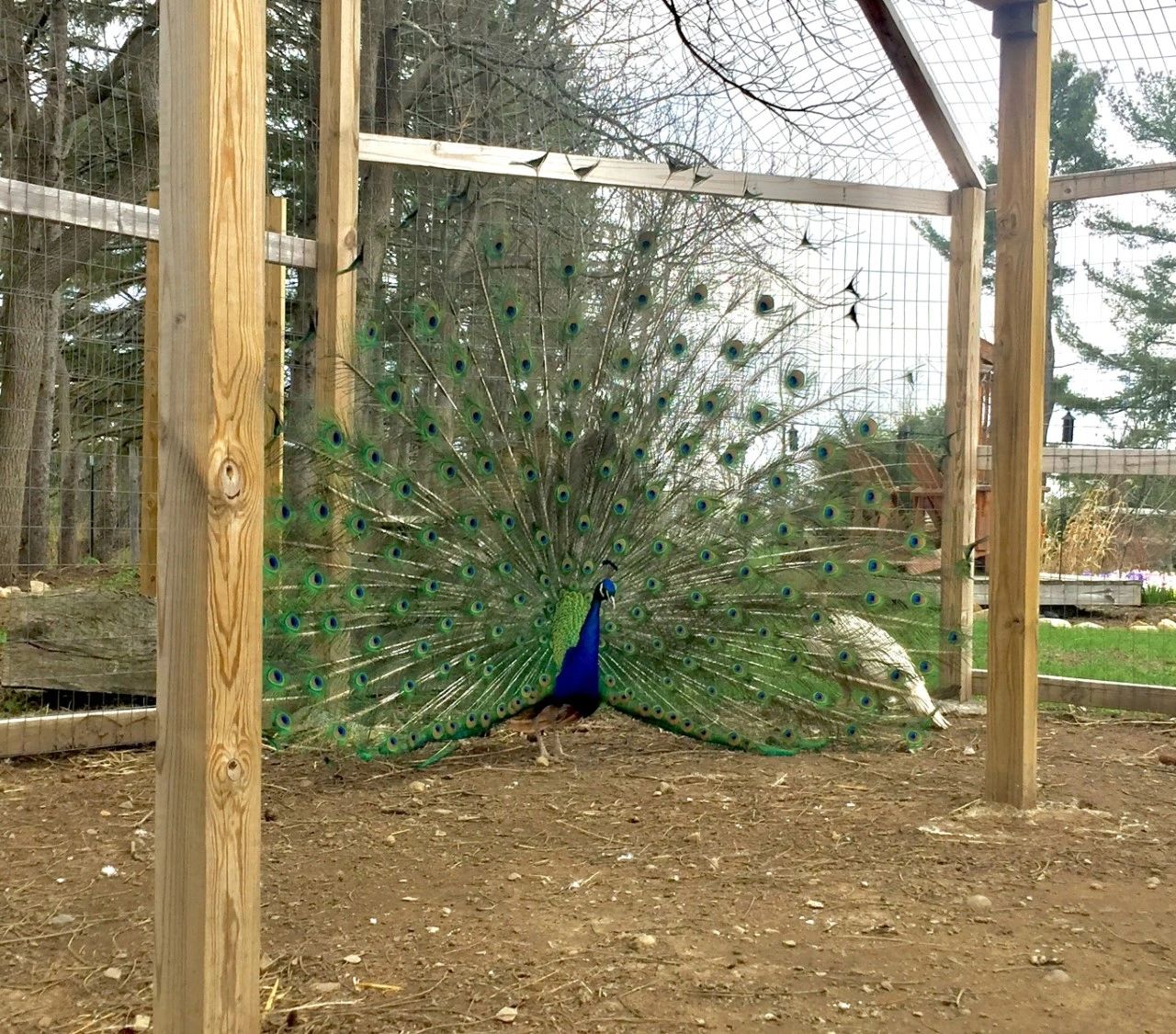
Peafowl need room not only to walk and roost, but to move naturally, fly up to elevated perches and - in the case of mature males - display a full train. A secure flight pen allows them that freedom without the risks that come with free-ranging.
What Works for Us
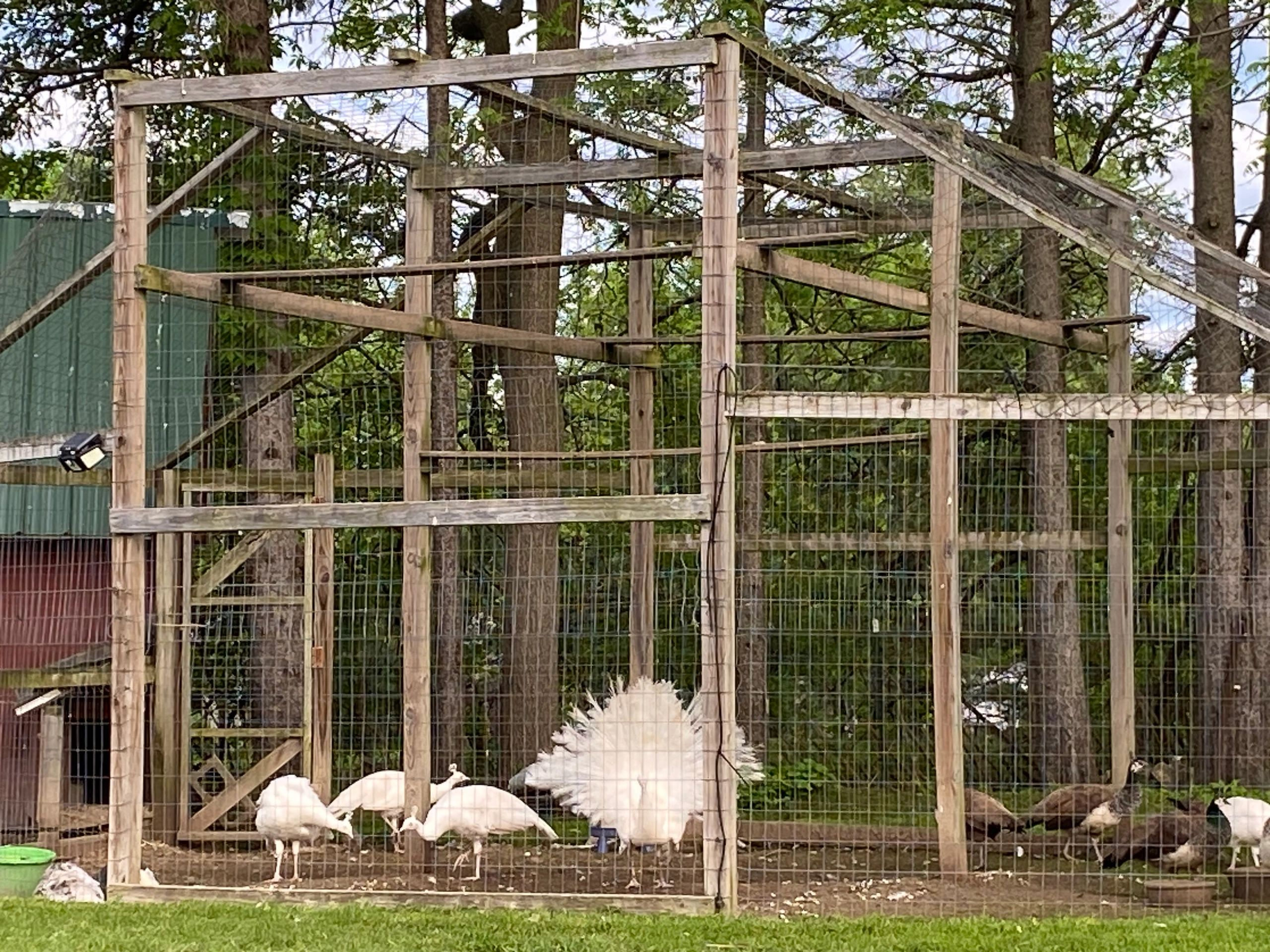
Our flight pens are approximately 10 feet high outdoors, giving peafowl room to fly to elevated roosts and allowing mature males space for their trains. Using 1"x2" welded wire, with smaller 1"x1" openings along the lower two feet, keeps out both large and small predators, while fencing extended below ground discourages digging, For overhead protection, we've found 2"x4" welded wire better suited to our heavy winter snow loads than poultry netting.

Predator Protection
Predators are a reality anywhere poultry is kept. After years of raising free-range chickens and guinea fowl, we learned firsthand just how bold and persistent they can be. When we began keeping peafowl, we made the decision not to free-range them. Instead, we rely on secure enclosures and multiple layers of protection to help keep them safe.
Secure the Pen
Strong fencing, secure doors and overhead protection form the first layer of defense. Smaller wire openings near ground level help protect against smaller predators.
Protect Below Ground
Predators don't always come through a fence - they may go under it. Extending fencing below ground helps discourage digging and has become an important part of our enclosure design.
Create Layers
Our peafowl pens sit within multiple fenced animal areas. Each additional barrier makes approaching the birds - and making a quick escape - more difficult for a predator.